Everyone has stood in front of an abstract canvas and thought: am I missing something? You aren't. Abstract painting isn't a puzzle with one answer — it's an experience you can learn to have more of. Here are the five habits our educators teach every school group.
1. Give it ninety seconds
Most visitors look at a painting for under fifteen seconds. Set yourself a tiny challenge: stay for ninety. Your eyes will adjust the way they do entering a dark room, and details — a buried line, a second color under the first — will start to surface.
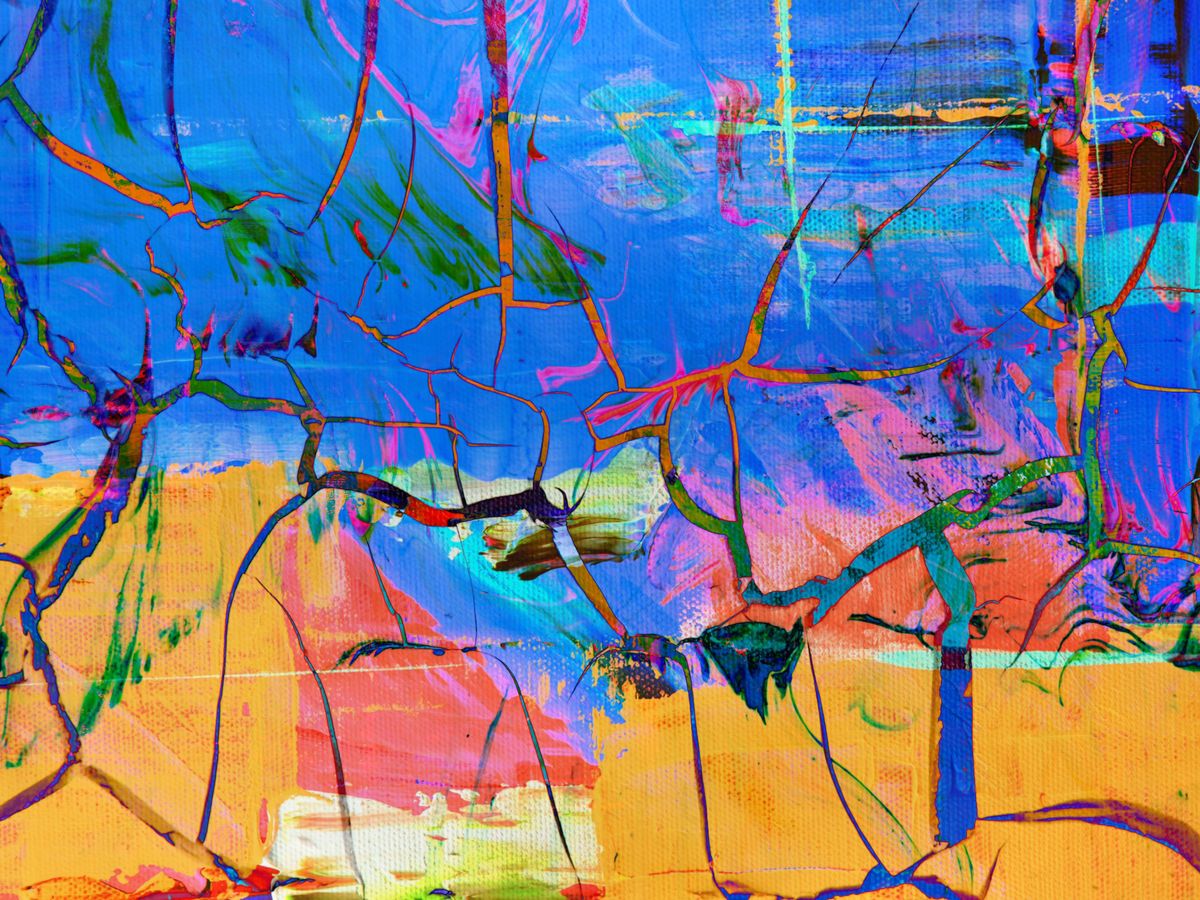
2. Follow the energy, not the objects
Ask where the painting moves fastest and where it rests. Fast passages read as excitement or urgency; still fields read as calm. You've just "read" the emotional structure of the work, no art history required.
3. Name three colors out loud
Saying "ochre, teal, rust" forces you to actually see the palette instead of summarizing it as "colorful." Then ask which color the painter used sparingly — that's usually where the decision lives.
The painting isn't testing you. It's waiting for you to slow down enough to meet it.
4. Notice your body
Do you lean in or step back? Large gestural works are choreography — the painter moved their whole arm, and your body often mirrors it. That physical echo is a legitimate response, not a naive one.
5. Read the label last
Titles and wall texts are other people's readings. Have yours first, then compare. The gap between your take and the curator's is where the interesting conversation starts — bring it to our Saturday talks.
Try all five in Hall Two this weekend. Our Abstract Art hang was designed for slow looking, with benches facing the largest canvases and room guides that wait until you're ready.